The 3-2-1 Method for Perfect Ribs
SouthernComfy Editorial Team
Cooking guides
What You'll Learn
- The science behind the 3-2-1 timing
- How to maintain consistent temperature
- When and how to wrap ribs
- How to achieve the perfect bark and sauce glaze
Why This Matters
This method takes the guesswork out of smoking ribs. Competition pitmasters use variations of this technique because it produces consistent, award-winning results every time. Once you nail this, you can adapt it to your taste.
Equipment Needed
- Smoker or grill with indirect heat
- Aluminum foil
- Spray bottle
- Instant-read thermometer
- Basting brush
Step-by-Step Tutorial
Understand the Numbers
3-2-1 refers to hours: 3 hours unwrapped (absorbing smoke), 2 hours wrapped in foil (tenderizing), 1 hour unwrapped (firming up and glazing). Total: 6 hours at 225-250°F.
Chef's Tip
Prep and Season Ribs
Remove membrane from back of ribs. Apply yellow mustard as binder, then generously coat both sides with dry rub. Let sit 15-30 minutes while smoker heats.
Chef's Tip
Chef's Tip
First 3 Hours: Smoke Unwrapped
Place ribs bone-side down in smoker at 225-250°F. Add wood chunks (apple or hickory). Maintain temperature and don't open lid. Spritz with apple juice every hour if desired.
Chef's Tip
Chef's Tip
Chef's Tip
Common Mistake
Wrap for 2 Hours
After 3 hours, remove ribs and wrap tightly in aluminum foil with butter, brown sugar, and apple juice. This steaming process breaks down connective tissue. Return to smoker.
Chef's Tip
Chef's Tip
Chef's Tip
Common Mistake
Unwrap for Final Hour
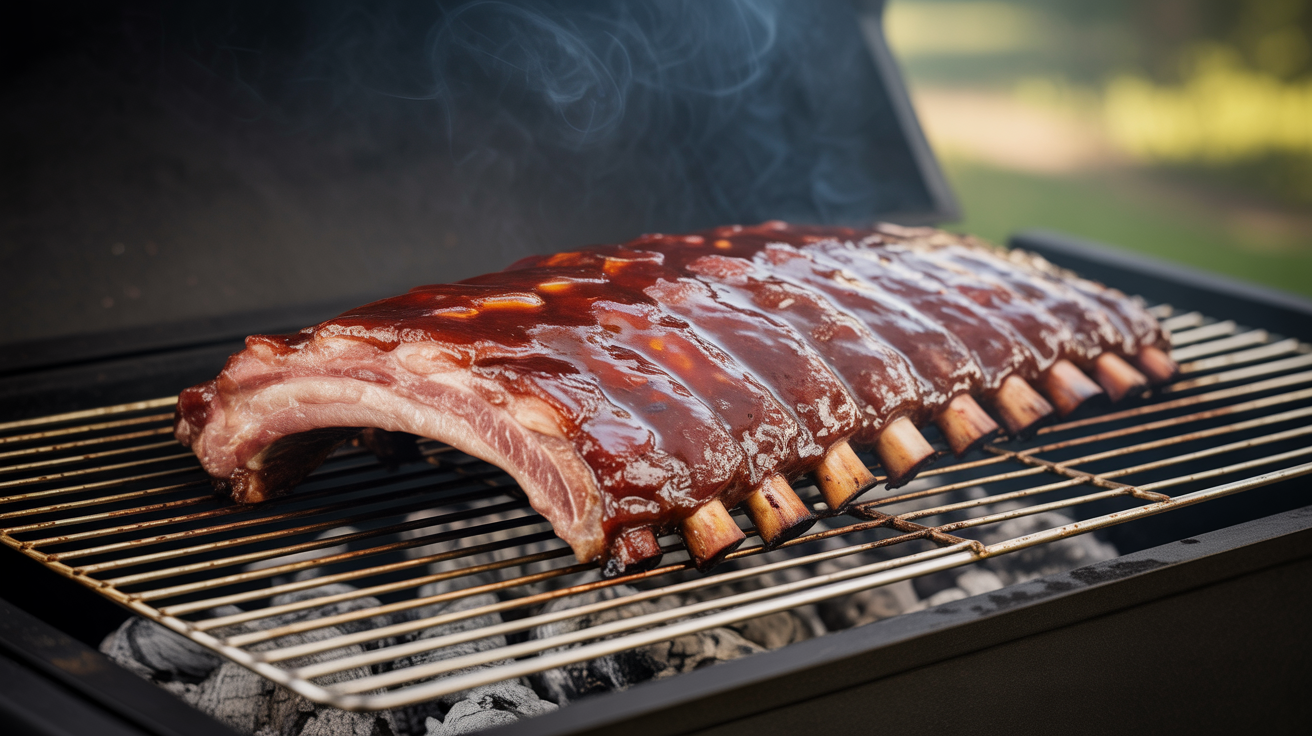
Carefully unwrap ribs (watch for hot steam). Place back on smoker bone-side down. Apply BBQ sauce in thin layers every 15-20 minutes, building up a glaze.
Chef's Tip
Chef's Tip
Chef's Tip
Common Mistake
Check for Doneness
Ribs are done when meat has pulled back from bones 1/4-1/2 inch, internal temp is 195-203°F, and they pass the "bend test" - ribs should bend and nearly break when lifted.
Chef's Tip
Chef's Tip
Chef's Tip
Pro Tips
Chef's Tip
Chef's Tip
Chef's Tip
Chef's Tip
Common Mistakes to Avoid
❌ Ribs are tough and chewy
Causes: Temperature too low, wrapped phase too short, or membrane not removed
Solution: Maintain 225-250°F consistently. Extend wrapped phase by 30 minutes if needed. Always remove membrane.
❌ Ribs falling completely off bone
Causes: Overcooked - likely too long in wrapped phase
Solution: Reduce wrapped time to 1.5 hours, or smoke at 235°F instead of 250°F. Check bend test earlier.
❌ Sauce is burnt and bitter
Causes: Applied too early or temperature too high
Solution: Only apply sauce during final unwrapped hour. Use thin coats. Lower temp to 225°F for glazing.
Troubleshooting & FAQ
See It In Action
Try these recipes that use this technique: