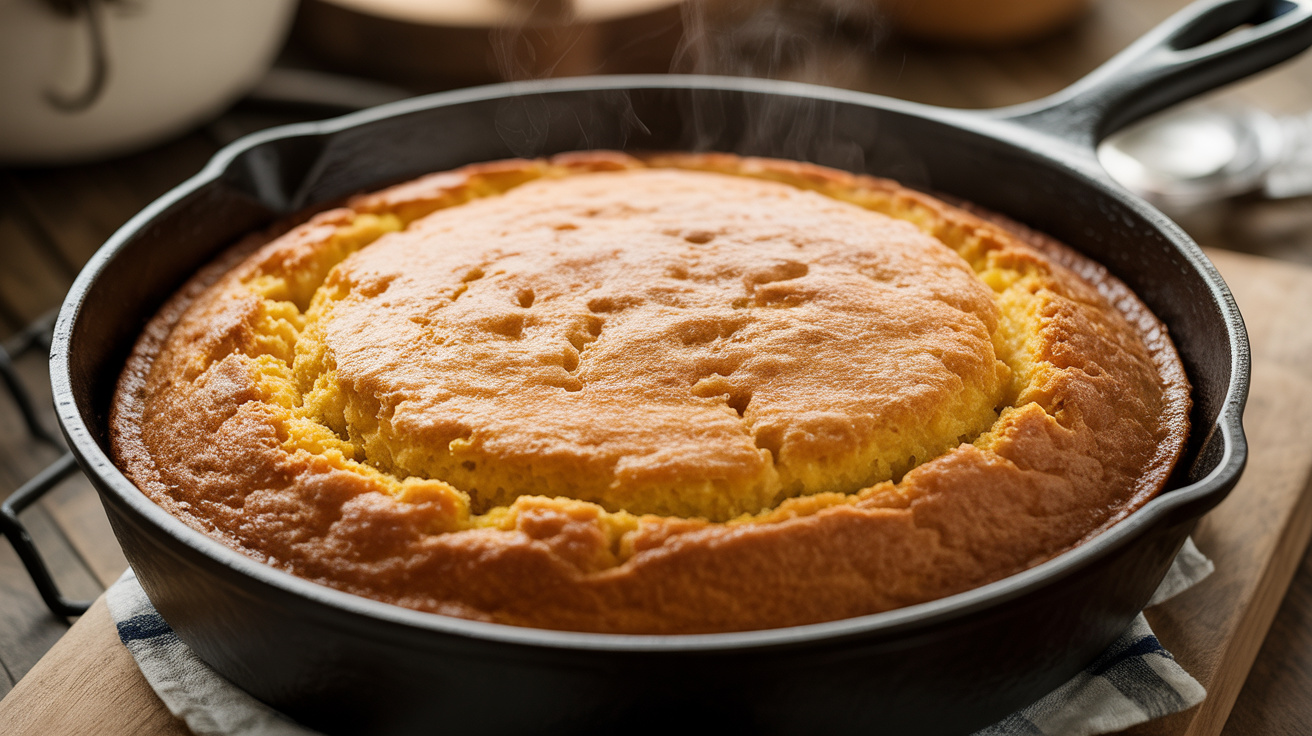
Cornbread Chemistry: Why Buttermilk Matters
SouthernComfy Editorial Team
Cooking guides
What You'll Learn
- How buttermilk activates baking soda
- Why cast iron creates the best crust
- The role of sugar in Southern cornbread
- How to achieve tender texture
Why This Matters
Cornbread is a Southern staple, but many recipes produce dry, crumbly results. Understanding the chemistry helps you troubleshoot problems and adjust recipes to your taste. This knowledge applies to all quick breads.
Equipment Needed
- 10-inch cast iron skillet
- Two mixing bowls
- Whisk
- Measuring cups
Step-by-Step Tutorial
Understand the Chemistry
Buttermilk is acidic. When mixed with baking soda (a base), it creates carbon dioxide bubbles that make cornbread rise and give it a tender crumb. This reaction starts immediately, so work quickly once liquids meet dry ingredients.
Chef's Tip
Preheat Cast Iron
Place cast iron skillet in oven with 2 tablespoons of butter or bacon fat. Heat oven to 425°F. The hot skillet creates an instant sizzle when batter hits it, forming that signature crispy crust.
Chef's Tip
Chef's Tip
Common Mistake
Mix Dry Ingredients
Whisk together 1 1/2 cups cornmeal, 1/2 cup flour, 1 tablespoon sugar, 1 teaspoon salt, 1 teaspoon baking powder, and 1/2 teaspoon baking soda. The combination of baking powder and soda ensures proper rise.
Chef's Tip
Chef's Tip
Combine Wet Ingredients
In another bowl, whisk together 1 1/4 cups buttermilk and 2 eggs. The eggs add richness and help bind everything together.
Chef's Tip
Chef's Tip
Combine Quickly
Pour wet ingredients into dry ingredients. Stir just until combined - batter should be lumpy. Overmixing develops gluten and makes tough cornbread.
Chef's Tip
Chef's Tip
Common Mistake
Pour into Hot Skillet
Carefully remove hot skillet from oven. The fat should be sizzling. Immediately pour batter into center - it will spread and sizzle. Return to oven.
Chef's Tip
Chef's Tip
Common Mistake
Bake and Test
Bake 20-25 minutes until top is golden brown and edges pull away from sides. Toothpick inserted in center should come out clean or with just a few moist crumbs.
Chef's Tip
Chef's Tip
Pro Tips
Chef's Tip
Chef's Tip
Chef's Tip
Chef's Tip
Common Mistakes to Avoid
❌ Cornbread is dry and crumbly
Causes: Overbaked, too much cornmeal, or not enough fat
Solution: Reduce baking time by 2-3 minutes. Add an extra tablespoon of butter to batter. Check doneness early.
❌ No crispy crust on bottom
Causes: Skillet wasn't hot enough, or not enough fat in skillet
Solution: Make sure skillet is preheating for full 10-12 minutes. Use more fat (3 tablespoons instead of 2).
❌ Dense and heavy texture
Causes: Baking soda was old, or batter was overmixed
Solution: Check expiration date on baking soda. Mix batter just until combined, no more than 10-12 stirs.
Troubleshooting & FAQ
See It In Action
Try these recipes that use this technique: