Perfect Pie Crust: The Cold Butter Method
SouthernComfy Editorial Team
Cooking guides
What You'll Learn
- Why butter temperature matters
- How to prevent shrinking during baking
- Proper rolling technique for even thickness
- How to tell when crust is ready to fill
Why This Matters
A great pie crust can make or break your dessert. This technique gives you consistent results and works for both sweet and savory pies. Once you master this, store-bought crusts become a thing of the past.
Equipment Needed
- Food processor or pastry cutter
- Rolling pin
- Pie dish
- Plastic wrap
- Bench scraper
Step-by-Step Tutorial
Freeze Your Butter
Cut 1 cup (2 sticks) of butter into small cubes and place in the freezer for 10-15 minutes. This is the secret to flaky crust - frozen butter creates steam pockets during baking.
Chef's Tip
Mix Dry Ingredients
In a large bowl, whisk together 2 1/2 cups all-purpose flour, 2 tablespoons sugar, and 1 teaspoon salt. The sugar helps with browning and tenderness.
Chef's Tip
Cut in Butter
Add frozen butter cubes to flour mixture. Using a pastry cutter or your fingertips, quickly work butter into flour until mixture looks like coarse crumbs with some pea-sized pieces.
Chef's Tip
Chef's Tip
Common Mistake
Add Ice Water Gradually
Drizzle 6-8 tablespoons of ice-cold water over the mixture, 1 tablespoon at a time. Toss with a fork after each addition. Stop adding water when dough just begins to come together.
Chef's Tip
Chef's Tip
Chef's Tip
Common Mistake
Form and Chill Dough
Divide dough in half. Shape each half into a flat disk, wrap tightly in plastic wrap, and refrigerate for at least 1 hour (or up to 3 days).
Chef's Tip
Chef's Tip
Roll Out Evenly
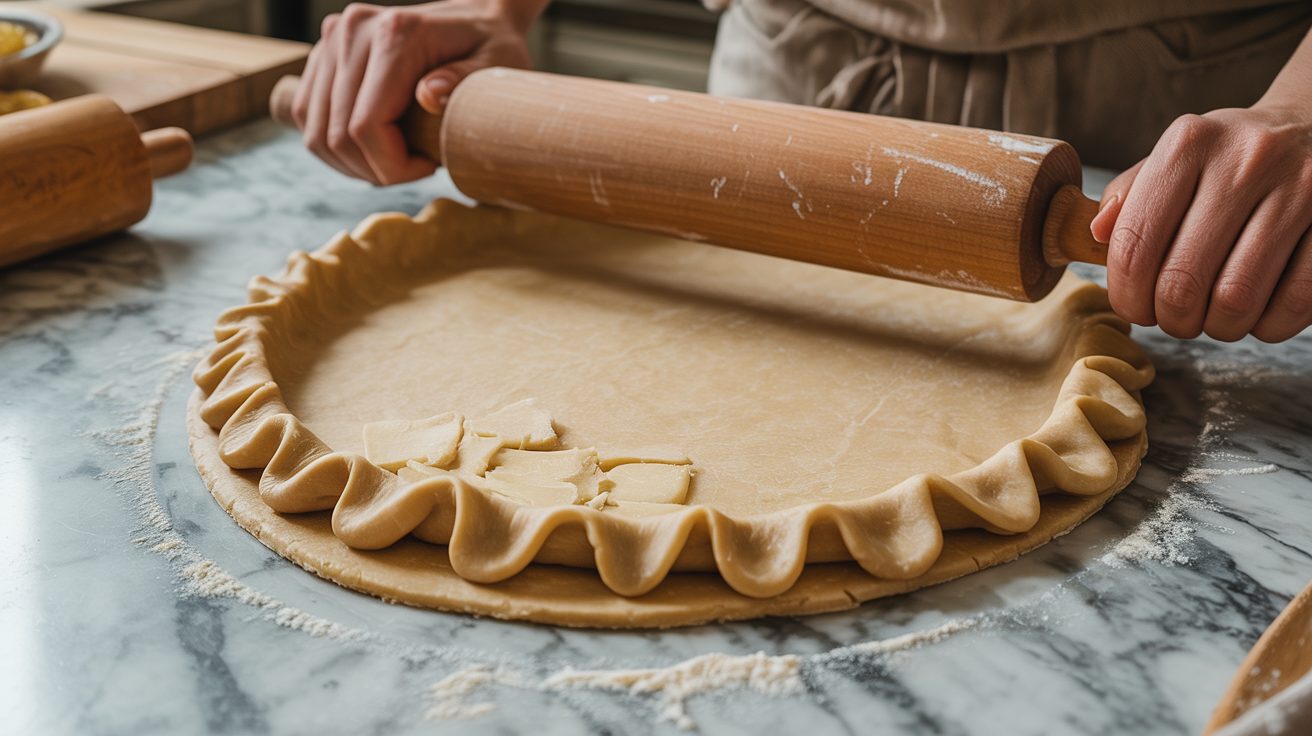
On a lightly floured surface, roll dough from center outward in all directions, rotating after each roll. Roll to 12 inches in diameter, about 1/8 inch thick.
Chef's Tip
Chef's Tip
Chef's Tip
Common Mistake
Transfer and Finish
Roll dough loosely around rolling pin, then unroll into pie dish. Gently press into bottom and sides. Trim excess, leaving 1 inch overhang. Fold under and crimp edges.
Chef's Tip
Chef's Tip
Pro Tips
Chef's Tip
Chef's Tip
Chef's Tip
Chef's Tip
Common Mistakes to Avoid
❌ Crust shrinks during baking
Causes: Dough was stretched when placing in pan, or wasn't chilled long enough
Solution: Never stretch dough to fit pan. Chill at least 30 minutes before baking. Don't skip this step!
❌ Crust is tough and chewy
Causes: Overworked dough, too much water, or butter melted before baking
Solution: Mix just until combined. Work quickly. Keep butter frozen until use. Let dough rest in fridge.
❌ Bottom crust is soggy
Causes: Not pre-baked for custard pies, or oven temp too low
Solution: Blind bake crust for 15 minutes before adding wet fillings. Bake on bottom rack at correct temperature.
Troubleshooting & FAQ
See It In Action
Try these recipes that use this technique: